
Skip to content
IMMERSEKOOL | Immersion Cooling (Single Phase)
Immersion Cooling

Single Phase Immersion

A next-gen thermal management solution that immerses IT hardware in a dielectric fluid to maximize cooling efficiency—quietly.

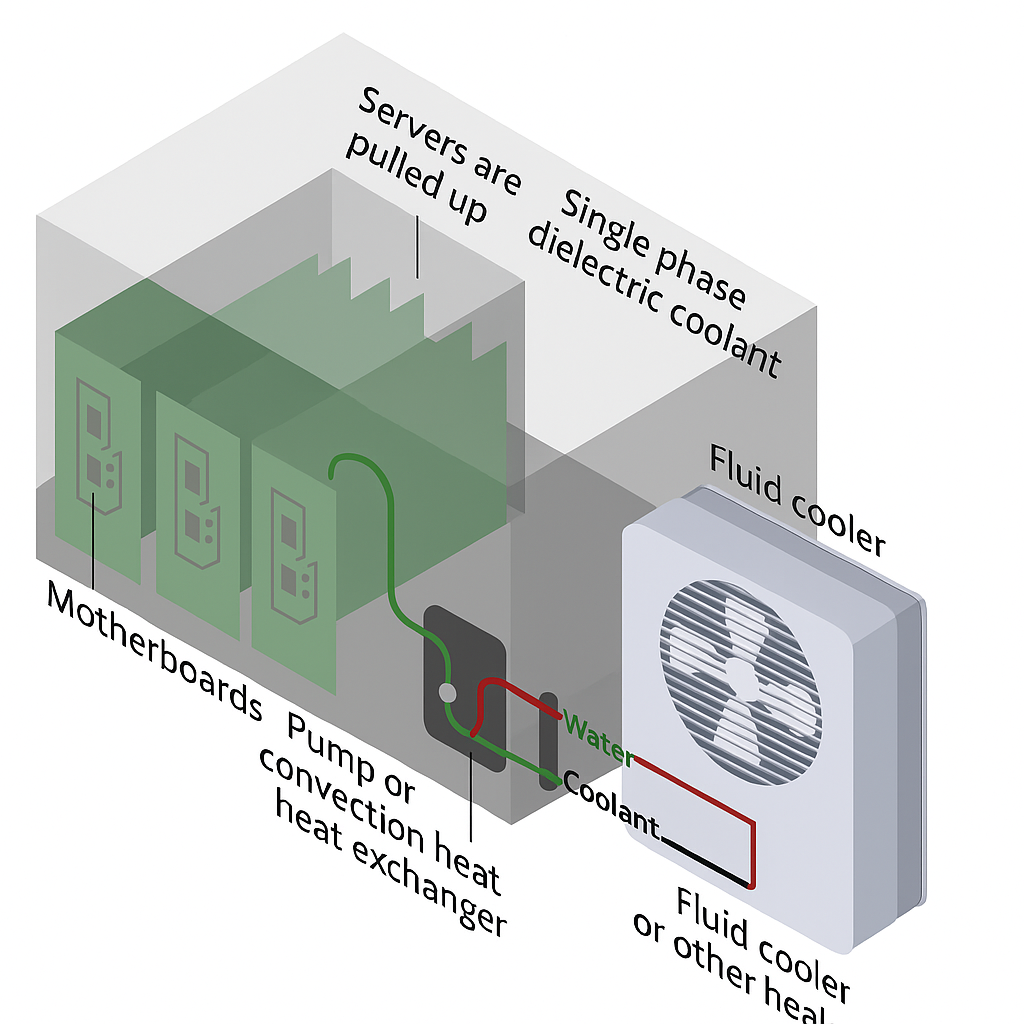
Single phase immersion diagram

Overview

Single-phase immersion cooling submerges electronic equipment in a dielectric fluid to remove heat. Globally, average data-center PUE is still around 2.0, meaning cooling and facility overhead can consume energy comparable to IT load. Immersion cooling can significantly reduce cooling power, helping lower TCO and mitigate carbon emissions—depending on design and operating conditions.
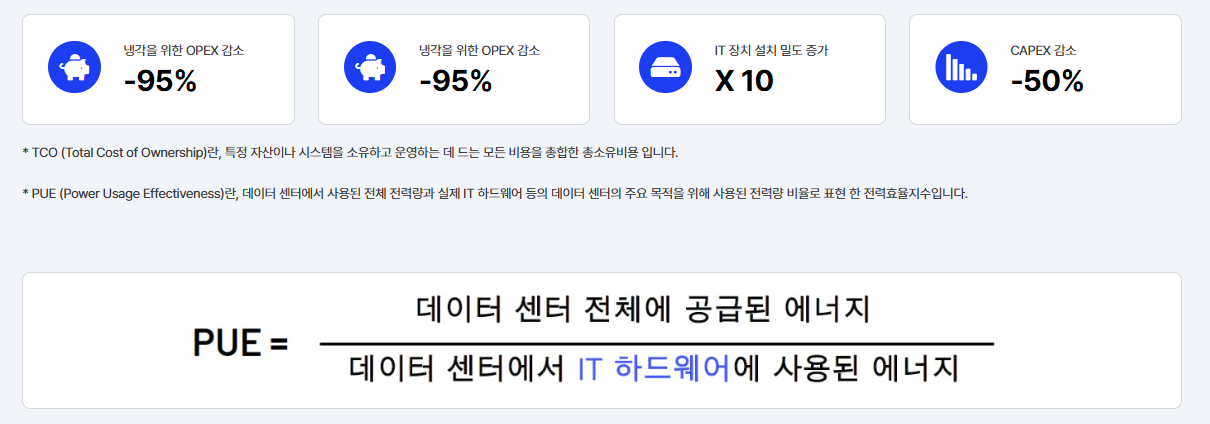
KPI and PUE infographic
Figures shown are infographic-style indicators. Actual results depend on workload, facility design, and fluid/system configuration.
How It Works

In single-phase immersion, the coolant remains in liquid state (no boiling) while absorbing heat. The warmed fluid is circulated through an internal loop where it is cooled via a heat exchanger and returned to the tank. Minimal evaporation enables easier operation and supports open-tank designs.

Constraints

  • Maintenance handling: equipment may require cleaning when removed for repair/replacement.
  • Weight / floor loading: the dielectric fluid increases total system weight and floor-load requirements.
  • Heat-transfer limit vs. two-phase: for extreme heat flux, higher flow and optimized heat exchange may be required.
  • Compatibility: chemical compatibility checks are essential for seals, cable jackets, and materials.

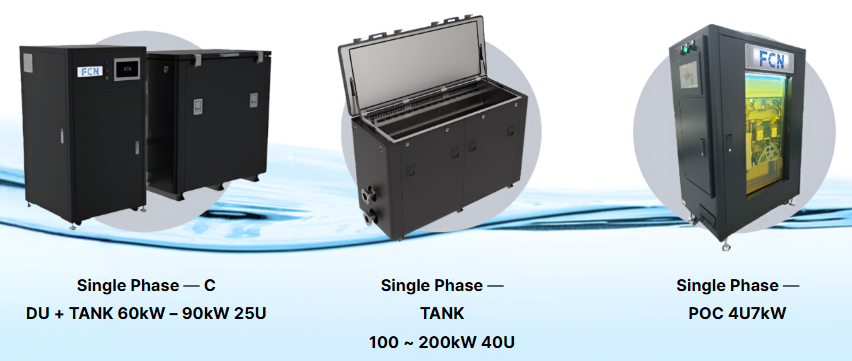
Example System Types

Representative system examples for single-phase immersion (capacity/format may vary).

Immersion system lineup